
By: Jelena Krivčević
On the harsh heights of the Dinaric Alps, where Slavic tribes have shared their destiny with pastures, swift rivers, and wolves for a millennium and a half, food was never merely about survival. It is a reflection of culture, a silent witness to history, and, above all, an invincible creative response to scarcity. In this ethnically diverse space, where Illyrians, Romans, Celts, Ottomans, and merchant caravans left their marks, an authentic mountain gastronomy was born—one that is not learned from books but inherited like a genetic code.
Creativity Born from Scarcity
The common thread connecting all people from the Montenegrin katuns is the need for hearty, high-calorie food. In a world where frost, deep snow, and hard physical labor are daily realities, a meal had to provide strength. Yet, mountain cuisine hides a touching truth: it was born from poverty. It was precisely this poverty that forced the highlanders into incredible creativity and a reliance on “wild” ingredients—those that were not cultivated but gathered in forests and meadows. Our mountains, however merciless, were also bountiful; they fed the people with what could be harvested in moments of greatest hardship.
The Evolution of the Table: From Palm to Sofra
The journey to the wooden table we sit at today was long and unusual. Through the centuries, the “dining table” adapted to nomadic life and the cramped space of the mountain huts (koliba):
-
The Sofra: In small village houses, space was precious. Therefore, the sofra—that low, round wooden table—was the perfect solution; after dinner, it would simply be hung on the wall. It remains a symbol of the katun to this day, easily transportable on horseback, ready to gather a “crowd of children” around cheese and priganice.
-
The Bošča: For the mowers and harvesters racing against rain clouds, the table was the bošča—a hand-woven woolen cloth. Unrolled in the shade, it was the precursor to every modern picnic, carrying the scent of homemade smok (dairy spread) and the warmth of freshly baked bread.
-
The Palm: Perhaps the most sacred “table” of the mountain. A shepherd or a student walking miles to school sits on the grass and pulls a piece of corn bread (kolobotnjica) and a bulb of onion from their bag. That morsel eaten “from the hand” nourishes both body and soul more than any lavish banquet.
Respect for Sweat and the Soil
On the mountain, every piece of bread is respected. It is a gift of nature and the result of hard labor, inscribed in folk proverbs that warn: “there is no greater misery than an empty stomach.” Our table is not modest, even when it holds only a hot potato baked in ashes with a bit of kajmak. It is magnificent because it is inseparable from the people who prepared it and the nature that brought it forth.
Today, as we slowly return to a “more natural” way of life, we are beginning to appreciate once again what we have always had: spring water so cold it makes the teeth ache, the morning freshness of the katun, and the taste of homemade bread that many remember as the dearest scent of their childhood.
The Montenegrin mountains—from Bjelasica and Komovi, across Prokletije and Durmitor, to Sinjajevina and the Tara Canyon—are not just geography. They are a world of extraordinary beauty and history where all senses find delight. For the mountain, despite its occasional ruthlessness, crawls into your heart. It is not easy to live with it, but it is impossible to live without it.
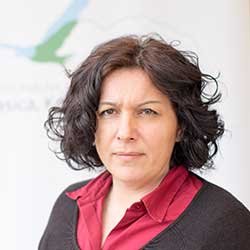
Jelena Krivčević
Jelena Krivčević has 15 years of experience in project management, including 10 years of experience in the Bjelasica, Komovi, and Prokletije region, and 5 years abroad. In various roles and positions, she has worked on the implementation of multi-million dollar projects in the fields of community development and economic growth in Montenegro and Georgia. She has provided consulting services primarily for USAID projects in Georgia, Serbia, and Kosovo, and has worked on the preparation and implementation of EU-funded projects.

