On Projects, Grants, and Accountability
A personal reflection on sixteen years in the civil sector
With this text, we are launching a dedicated space for original perspectives on our website. We wanted the first piece to be more general—addressing projects and NGOs—as a personal reflection from someone who has spent sixteen years at the Regional Development Agency and has experienced the highs and lows of the sector.
By: Jelena Krivčević
Future texts will tackle more specific topics concerning the rural and mountain areas where we work, but it felt essential to share this experience first. One of the most common beliefs I have encountered over the years is that grant money, especially for NGOs, is “easy money”—easy to get and even easier to spend. The perception is that it can be misused, “taken home,” or spent without real accountability.
I understand why this perception exists. People have seen it all—within institutions and organizations alike—and it is natural to be skeptical. However, I also know that most people lack a clear picture of what projects actually look like from the inside, especially those funded by the European Union and international donors. In my experience—with ten years in international organizations and sixteen years at the Regional Development Agency—the reality is significantly different.
Grants are not easy to obtain. Competition is fierce, processes are demanding, and criteria are strict. For every approved project, there are many more applications that didn’t make the cut—not because they were bad, but because funds are limited and standards are high.
While I haven’t kept precise statistics, I am fairly certain we write at least three times as many projects as are ultimately approved. An even greater misconception is that grant money is spent without oversight. In our case, for example, we face some form of control almost every month. Every project undergoes at least two financial checks, a mandatory final financial audit, and sometimes extraordinary audits.
Then there are programmatic monitoring controls at multiple levels. All told, a single project faces at least five serious audits. This is coupled with a massive amount of documentation for every activity and expense—records that must be kept for at least five years. Mistakes are remembered and carry consequences; one poorly executed project can end your ability to apply for new ones in the future.
I do not believe the NGO sector is without its problems. Irresponsible practices certainly exist within NGOs in Montenegro, as they do in all segments of our society. The registry is full of inactive organizations, and some exist precisely because of the perception that grants are “easy money.” However, I am convinced that such organizations cannot last long. Serious, long-term work cannot be built on irresponsibility.
If societies developed solely through workshops and conferences, Montenegro would have been Switzerland long ago. Development is a complex process and must be approached from multiple angles and in diverse ways.
I view some organizations as less than quality specifically because they take lightly what it means to gather people to improve their knowledge and skills. A flawed approach to capacity building causes further damage—it “burns out” target groups. People grow tired and lose interest, eventually refusing to participate even in high-quality, important activities. This erodes trust and diminishes the space for real impact.
Ultimately, the quality of projects suffers, and project quality is key if we want to contribute to society and improve sectors for which there is often insufficient funding in the state budget. To conclude—for me, projects are not easy money. They are an obligation. An obligation to donors, but primarily to the people we work with.
Every project must make sense, as each new one is built on the experience of the last. If one link fails, the whole chain falls. I believe it is important to speak honestly about organizations, without myths and simplifications.
I am not writing this to defend the sector, but because as long as the distinction between serious and irresponsible work isn’t clearly made, mistrust will remain. My personal conclusion is simple: despite the uncertainty of living from project to project—I love what I do. I respect the freedom to choose to work on what I believe in, and I strive to treat that freedom responsibly.
I value being outside of party trenches, able to think and conclude without political conditions. I love that I am constantly learning and meeting people from whom I can learn. And I sincerely rejoice in every positive comment from an auditor about our work, because I know it came solely on merit. And when our work is praised by our fellow citizens on the ground—that is a satisfaction greater than any other.
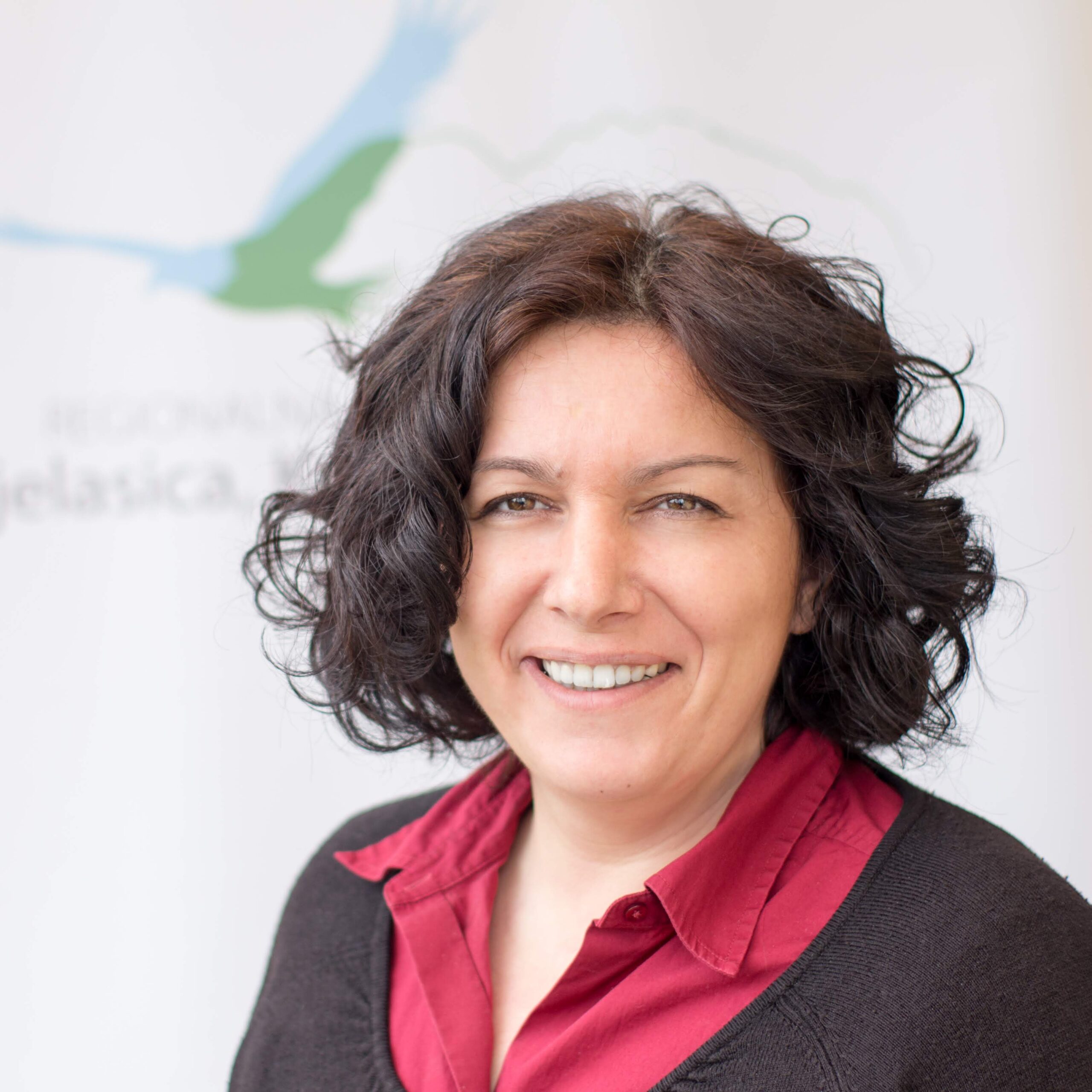
Jelena Krivčević
Jelena Krivčević has been working in international and local organizations on various projects since 1999, mostly in Montenegro but also with 6 years of experience abroad. In different roles and positions, she has worked on the implementation of multi-million dollar projects in the fields of community development and economic growth in Montenegro and Georgia. She has provided consultancy services for USAID projects in Georgia, Serbia, and Kosovo, and has worked on the preparation and implementation of over 30 EU-funded projects. She has been at the head of RDA BKP practically since its founding, building it with her team into a respectable and successful organization.