
Raising awareness and community education is crucial. When they realize the advantages of traditional construction, natural attractions, and the food they produce, there will be greater interest from rural households in engaging in tourism. Experts claim that we have far greater potential than Austria.
The Regional Development Agency for Bjelasica, Komove, and Prokletije—alongside a series of projects supporting food producers (“The Best from Our Mountains”), hiking and biking trails, fly-fishing zones, managed climbing rocks, cultural routes, and visitor centers—has done much in recent years to make the story of rural tourism in this area a reality.
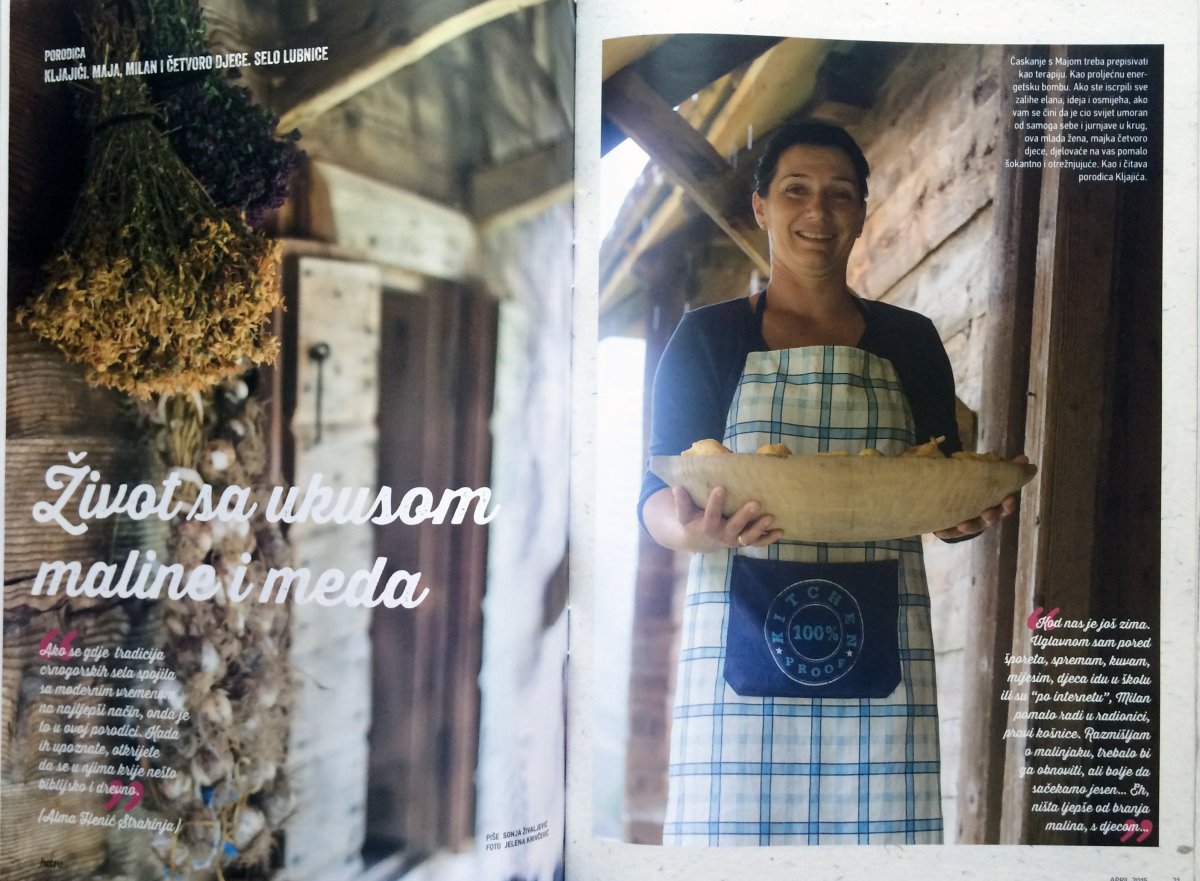
– The first steps were difficult, – recalls Jelena Krivčević, the energetic Director of the Regional Agency. – Our people in the villages could hardly see what they had to offer to some tourists out there. They thought what they had was too simple, not attractive enough. They thought they needed to have conditions like Hotel Bianca to be competitive. And rare among them recognized the advantages of traditional building styles or home furnishing. That’s why it was important for us at the very beginning to find families who already believed they had something to offer and who had the energy to pave the way for others. This was primarily the Puletić family from Lipovo near Kolašin, who had already taken the first steps in cooperation with the Italian Ministry of Foreign Affairs and later collaborated closely with us.
JUTRO: Was the Agency also involved in training?
– The first households we worked with, like the Puletići or the Kljajići from Lubnice near Berane, did a lot to spread the idea of rural tourism in their villages. In Lipovo, for example, today we have a dozen families interested in this activity, and several of them are already providing services. Through our projects, we were able to conduct the first training sessions, and we had very positive reactions from the participants. Training is very important not only for acquiring essential knowledge but also for meeting other people engaged in rural tourism and exchanging their experiences. We know, for instance, that many families who participated in our training have continued to maintain contact with each other, visiting, consulting, and making agreements. They are currently trying to harmonize prices so that there isn’t a large difference between prices in Lipovo and Lubnice, for example.
Obstacles and Challenges in the Field
JUTRO: What are the biggest obstacles to faster development?
– There are many obstacles, and we try every day to overcome them together. The problem is that our municipalities often only declaratively promote tourism as a strategic direction for development, but rarely take concrete steps in that direction. Recently, we had a citizens’ assembly in Lubnice because their problem is unregulated waste disposal, which is a very common case in rural areas. So we have a paradox where our most beautiful regions—mountain villages—present an ugly picture of trash thrown everywhere in streams and rivers. We invited representatives of the Berane municipality to that assembly and agreed to include Lubnice in the territory covered by the Utility Company, to bring in containers, and to organize a cleaning action. Problems also include unkempt village yards. The problem is “elox” (aluminum) joinery, a lack of understanding of the importance of preserving tradition and ambient integration.
Our Ministry of Agriculture and Rural Development has been providing support for households that want to engage in rural tourism through the agro-budget for three years now, but unfortunately, there is very little interest in this type of support. We believe it is necessary to work on this, motivate people, and create other support packages at both the local and state levels to improve the situation in this sector. Raising awareness, although it is a term too often used, is very important, along with community education; only then will there be greater interest.
JUTRO: We know well that tourists adore our food.
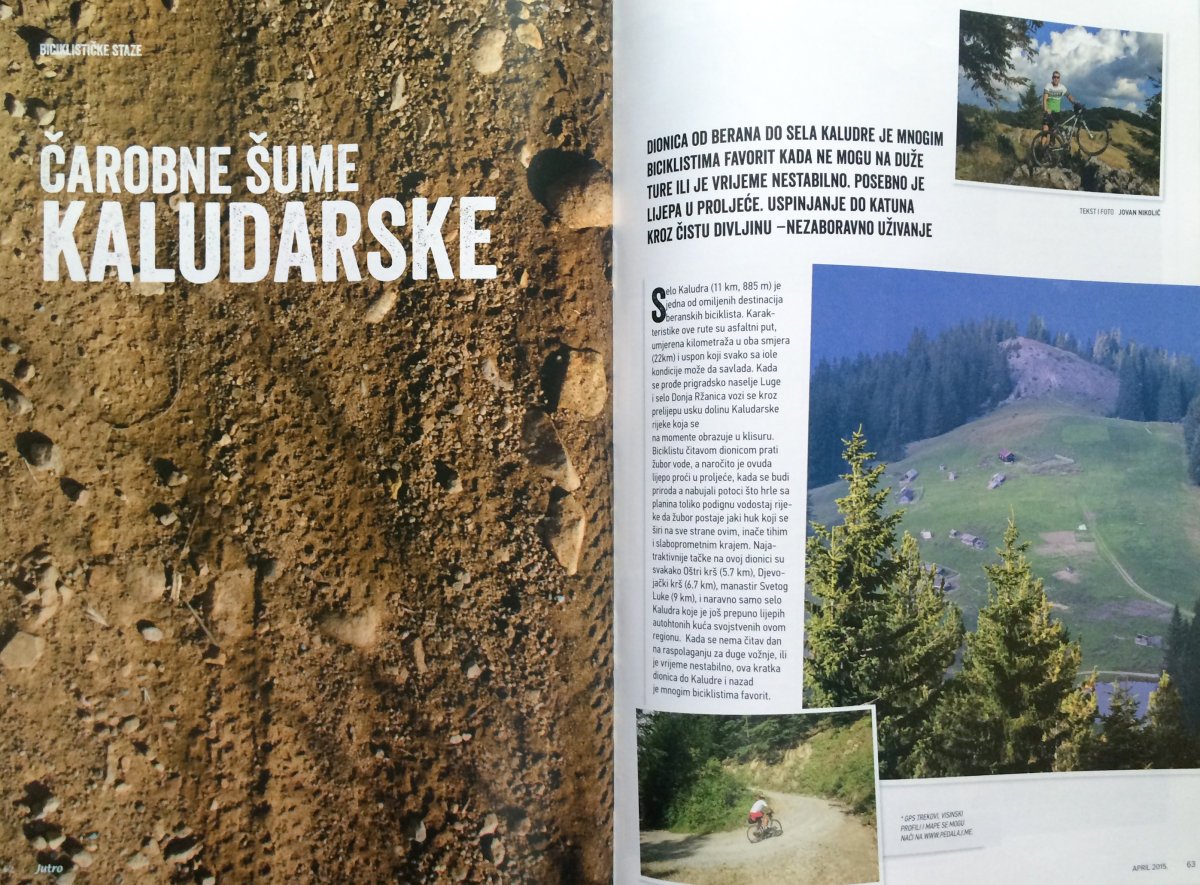
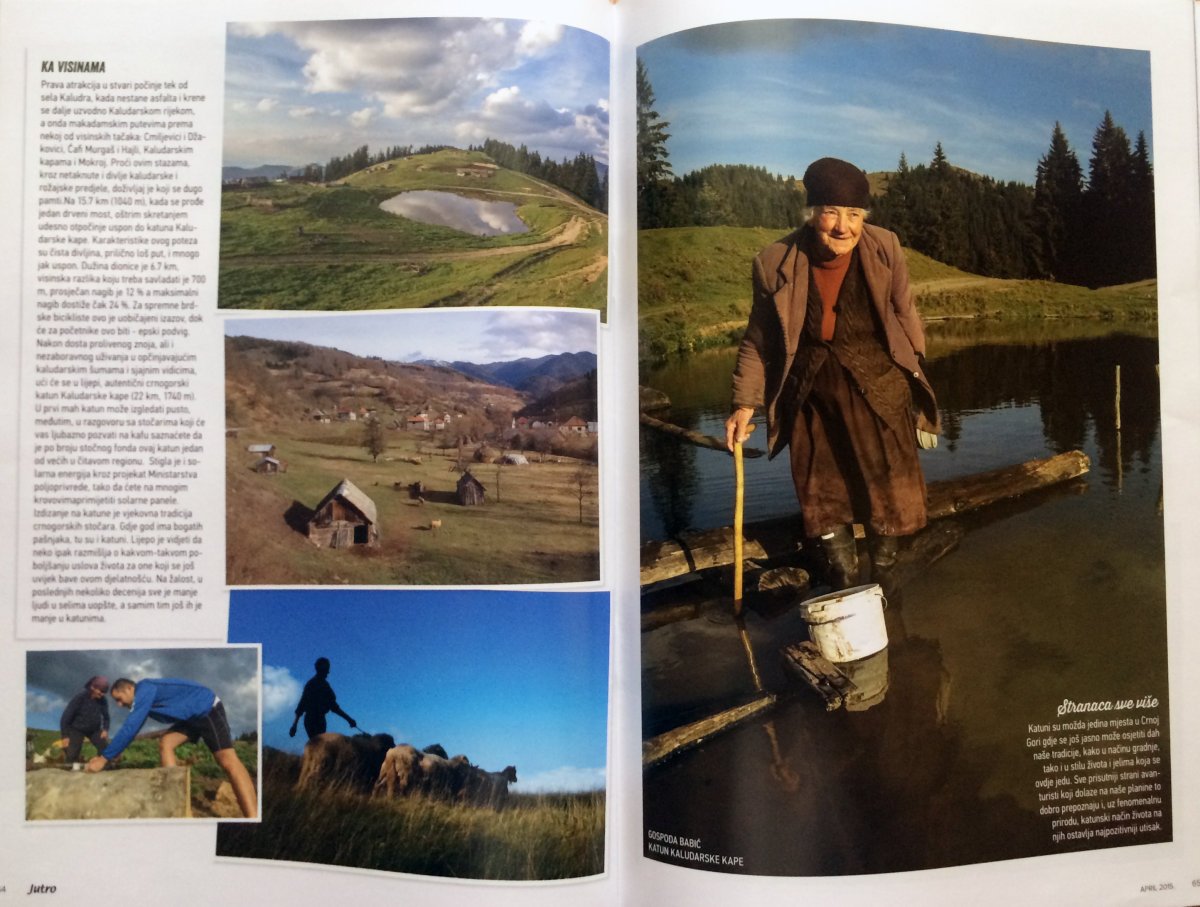
– Our traditional dishes and authentic hospitality, which isn’t learned at some training but is part of our upbringing and tradition, are what completely impress guests. Recently, I read a blog by an American who traveled the whole world by bicycle and visited our “Magic East” bike trail. He dedicated most of the text to his experience in one of the Berane “katuns” (mountain huts) on Kaludarske Kape, where he and his friends spent the night in one of the simplest possible huts, without any luxury elements. They ate the food normally prepared in katuns and spent time with the family who hosted them without asking for any compensation. Out of their entire experience in Montenegro, they dedicated half of their story to the katun and the hosts. This is just one example, and there are many showing that these things are the most memorable for visitors staying in our regions. A few months ago, an Italian woman who had lunch at the Puletići’s contacted us, asking for the recipe for “kačamak”!
JUTRO: How are travel agencies reacting?
– Travel agencies, except for some bright examples like the RAMS agency from Bijelo Polje, very rarely have rural tourism in their offer. However, it turns out that they often stop their groups traveling through our region for a meal at rural households. So far, the experience is that rural households mostly provide food preparation services, but since last year we also have guests staying overnight. We hope agencies will recognize these trends and very soon include rural tourism in their offers and promote it, for the mutual benefit of both agencies and rural households.
Faith in the Rural Tourism “Boom”
JUTRO: Do you believe in a rapid development of rural tourism here?
– Yes, I completely believe so. Provided that attention is really paid to this sector and a series of measures are established so it can come to life the way I want it to. Austria has huge revenues from rural tourism, and believe me, Austrian experts claimed that our potentials are far greater than theirs. If someone doesn’t believe we can do what Austria does, then they should look at what is happening in the field of rural tourism in neighboring Serbia, which is far ahead of us. I definitely believe we can make a boom, and it’s a great shame we haven’t done it already.
JUTRO: What should be done?
– I believe that rural tourism should be dealt with more seriously at the state level. It would be good to determine zones of special interest regarding rural tourism, as not every village has strong potential for this activity. More significant work should be done on the ground with people who have these interests, and all actors, from local governments to ministries, should be involved in the story. We don’t have a strategy for the development of rural tourism, and everything that has happened so far was ad hoc and without much tactic. I believe that rural and mountain/outdoor tourism are closely linked and must be developed in parallel.
JUTRO: You have come to know today’s rural family well.
– Our work with rural households is something that fulfills all of us at the agency. I have directly collaborated with all our households; we built a friendly relationship, and I am particularly proud of that. These are people who decided to stay in the villages and live off their work, whose value system remained undisturbed by all the turbulences happening in our society. These are healthy, hardworking families who give me new energy and enthusiasm every time. I’ve noticed that they leave a similar impression on all the guests who come to them, and that makes me especially happy.
– What I am particularly proud of is the fact that women from these families have strengthened their roles, because women are the carriers of almost all activities in rural tourism. We didn’t expect it, it wasn’t our plan, but it turned out to be the normal logic of things. Life for a woman in the village is very difficult and exhausting, and all the women involved in rural tourism have the same story—their quality of life has improved, they have a new dynamic and events in their daily lives, they earn money, and their role in the family is changing and strengthening. This particularly pleases me and makes me happy as someone who wants a more equal role for women in Montenegrin society – points out Jelena Krivčević.
JUTRO: What requires the largest investments?
– According to our experience so far, we can say that investments in households are most often needed for arranging houses, not so much in a construction sense but in a cosmetic one. Bathrooms and kitchens are the areas that most often need adaptation, renewing furniture, as well as landscaping yards. It is also very important that rural households joining the rural tourism sector have other tourist facilities nearby. In our selection, we tried to ensure that the villages we work with are located near popular hiking and biking trails and other tourist attractions. It is also necessary to link households together, as was done in the case of the “Cheese Roads” in Kolašin, or the “Wine Roads” in central Montenegro.






5 Comments.
Wat lief.
Pišemo zajedno projekat na tu temu
?:))
I pade dogovor na Facebooku 🙂
Neka je sa srecom! :))
Jelena preporučila i ja kupila :), interesantan časopis, dosta tema je obrađeno, nek vam je sa SREĆOM!!!