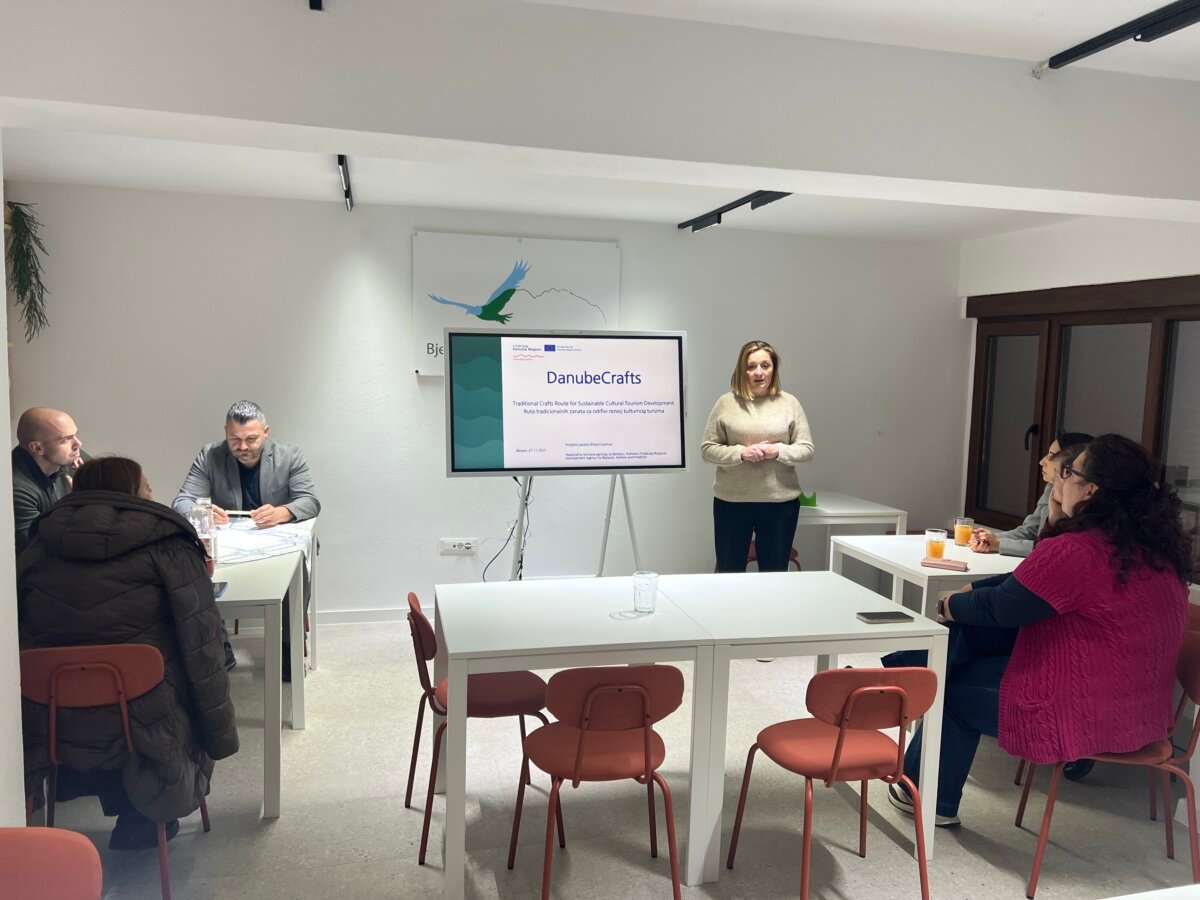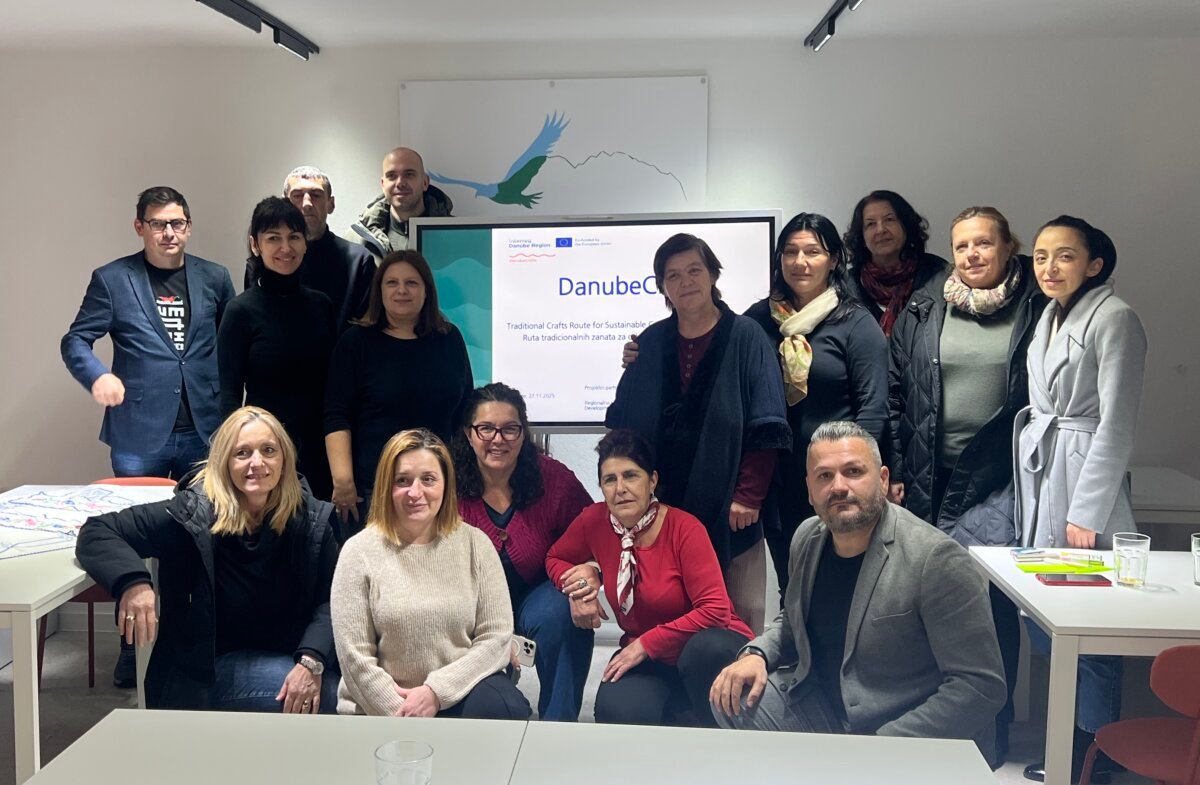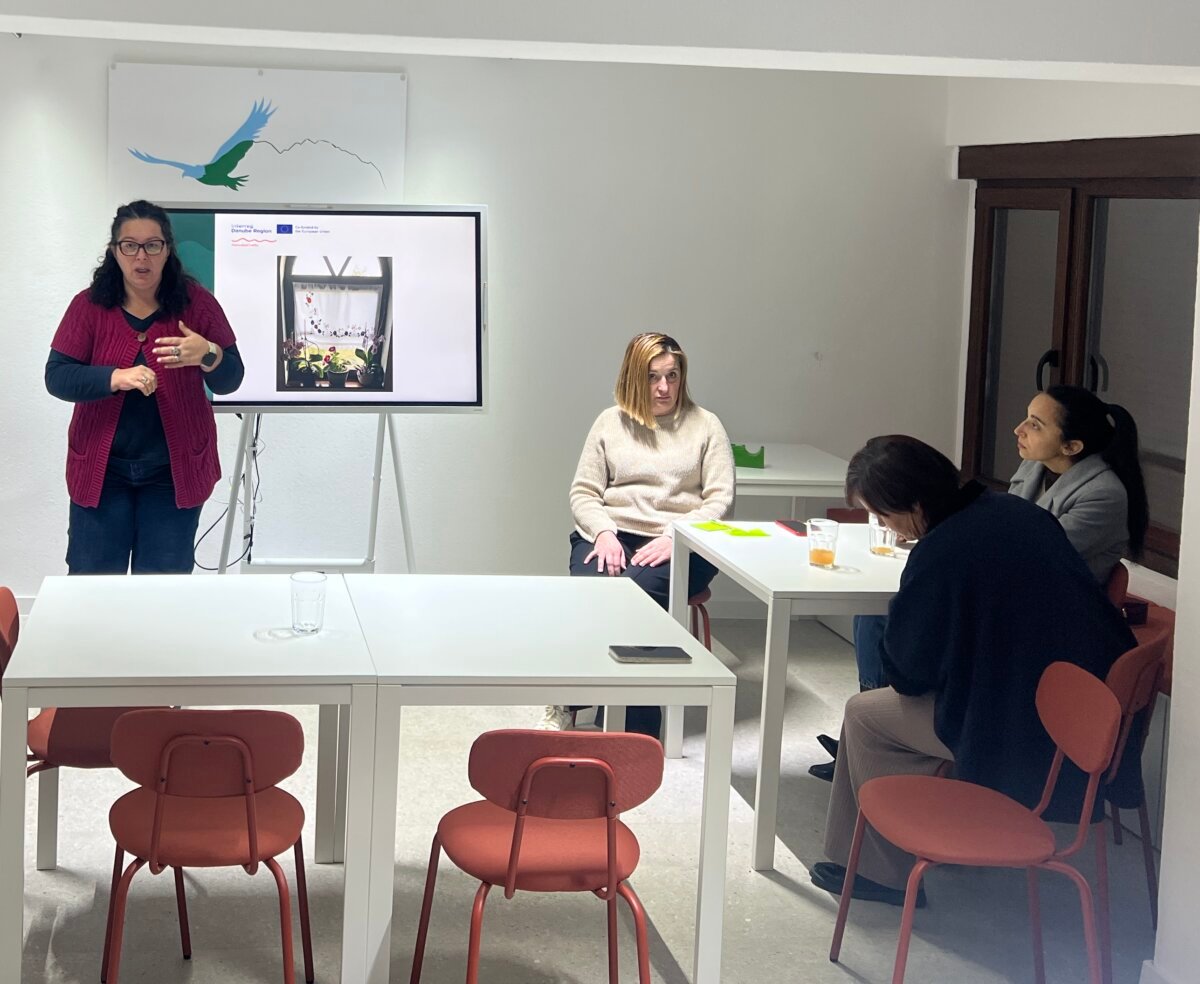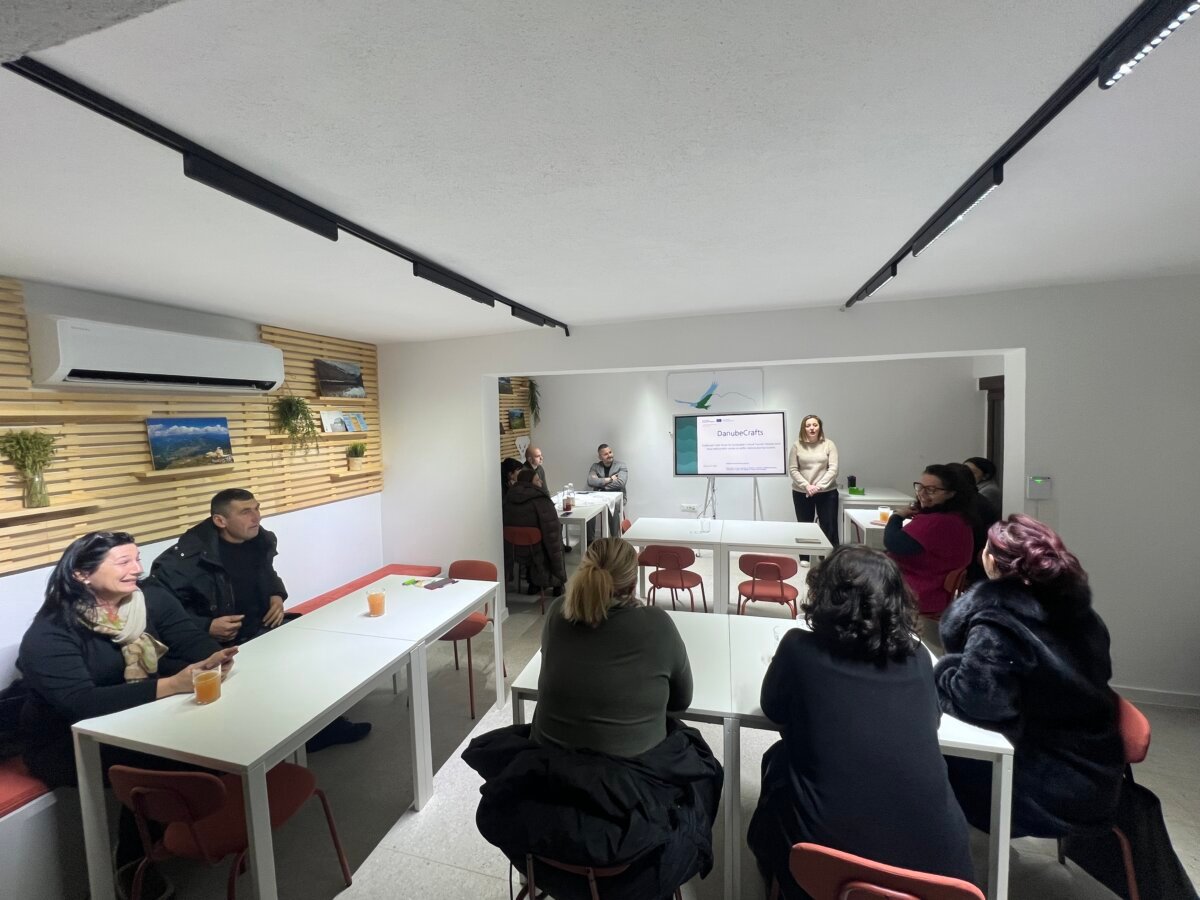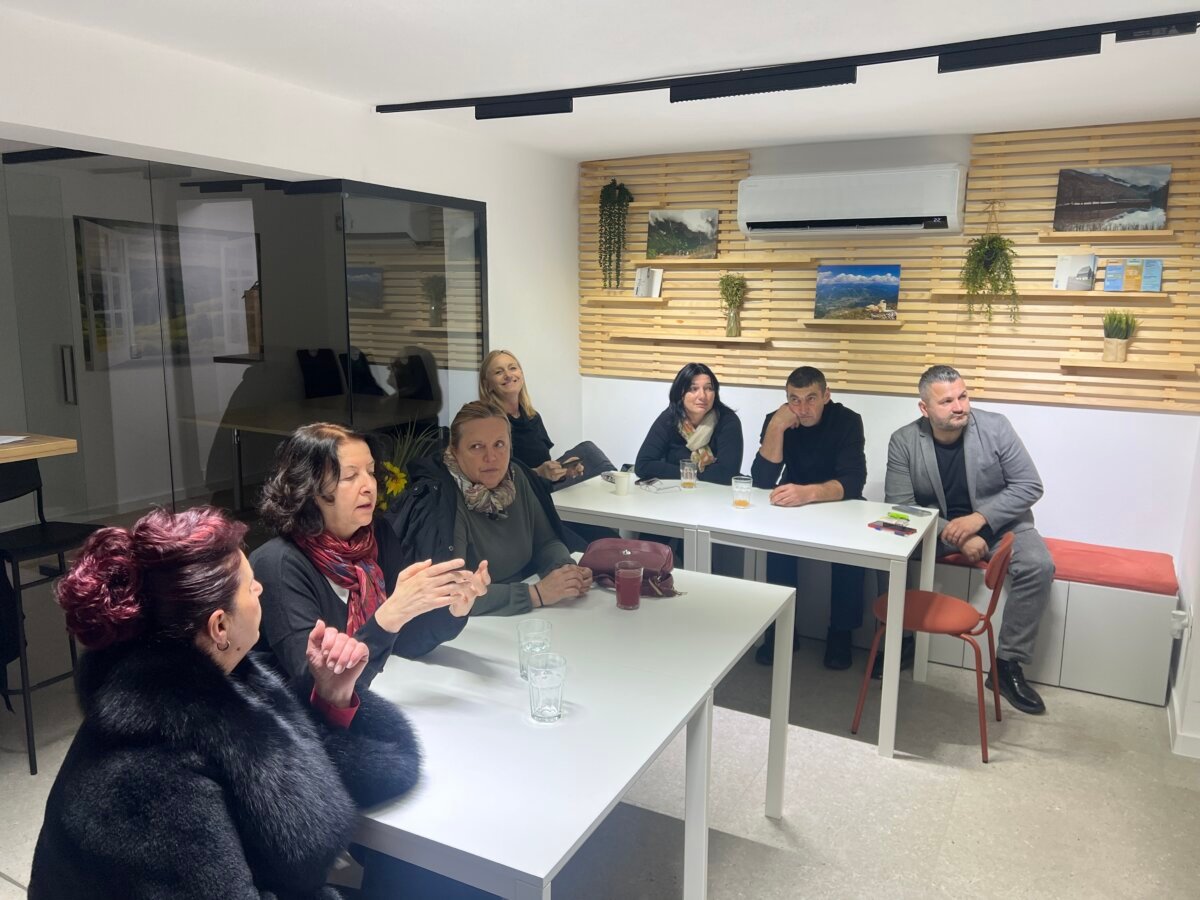
A stakeholder meeting was held at the Regional Development Agency for Bjelasica, Komovi and Prokletije with rural women from Berane, handicrafts producers, representatives of Kala organisation, the Souvenir Shop of the Tourism Organisation Berane, and partners from Sibiu (Romania), who were visiting Montenegro as part of a peer-review visit within the Commheritour project. The meeting served as an important platform for discussing the current state of traditional crafts in Berane and surrounding municipalities, identifying challenges, and exploring opportunities for revitalisation.
Participants discussed a wide range of topics, including the condition of local crafts, issues related to wool processing, and possibilities for adapting traditional skills to contemporary market demands. A SWOT analysis of the local handicraft sector was also conducted, highlighting strengths such as rich cultural heritage and motivated women artisans, as well as weaknesses related to market access, skill transfer, and modern product design.
Partners from Sibiu contributed significantly by sharing their extensive experience in the souvenir and handicrafts market and presenting valuable insights gained through the Commheritour project. Their guidance on product development, packaging, storytelling, and consumer expectations was particularly useful for local artisans who are exploring new ways to position their work within the tourism sector.
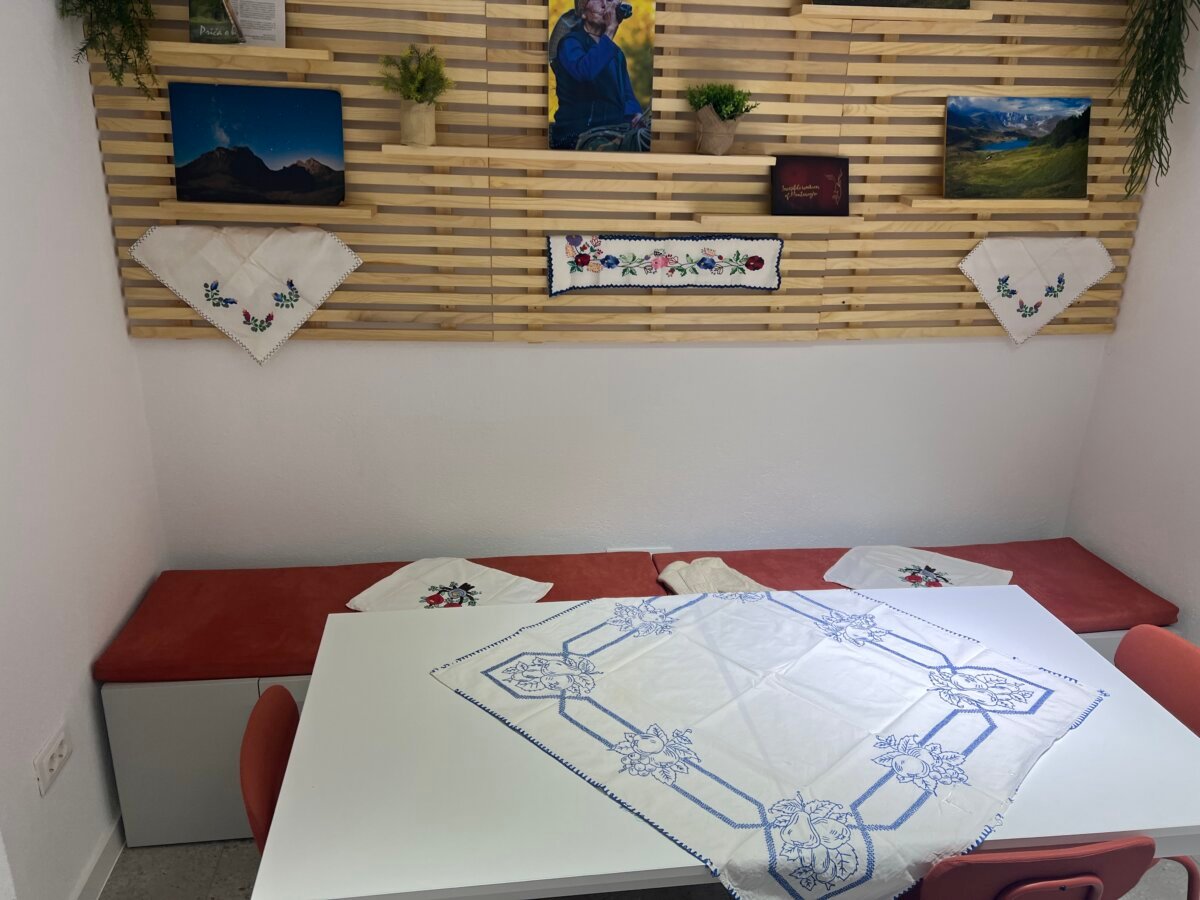
Through joint discussion, stakeholders identified embroidery as a highly promising direction for a pilot activity. Embroidery is deeply rooted in the local tradition, requires minimal investment, and offers strong potential for creating attractive, small-format products suitable for the souvenir market. Women expressed strong interest in learning or improving embroidery skills, confirming the relevance of this initiative.
The pilot activity will therefore focus on organising embroidery training for interested women, supported by ethnological research to identify authentic local motifs that can be adapted for modern use. The final objective of the pilot is to develop prototype souvenir products featuring traditional embroidery, which will be tested in the Souvenir Shop of the Tourism Organisation Berane. This will help assess market interest and guide future product development.
This initiative is implemented within the Interreg Danube project “DanubeCrafts,” funded by the European Union, which aims to preserve traditional crafts, strengthen local capacities, and integrate cultural heritage into sustainable tourism development. The embroidery pilot represents a meaningful first step toward building a functional model of cooperation between rural women, craft associations, and the tourism sector in Berane.
The Regional Development Agency will continue to support all involved stakeholders, confident that embroidery—an important part of Montenegro’s intangible cultural heritage—can once again take its place in the local craft landscape and contribute to the economic empowerment of women in rural communities.